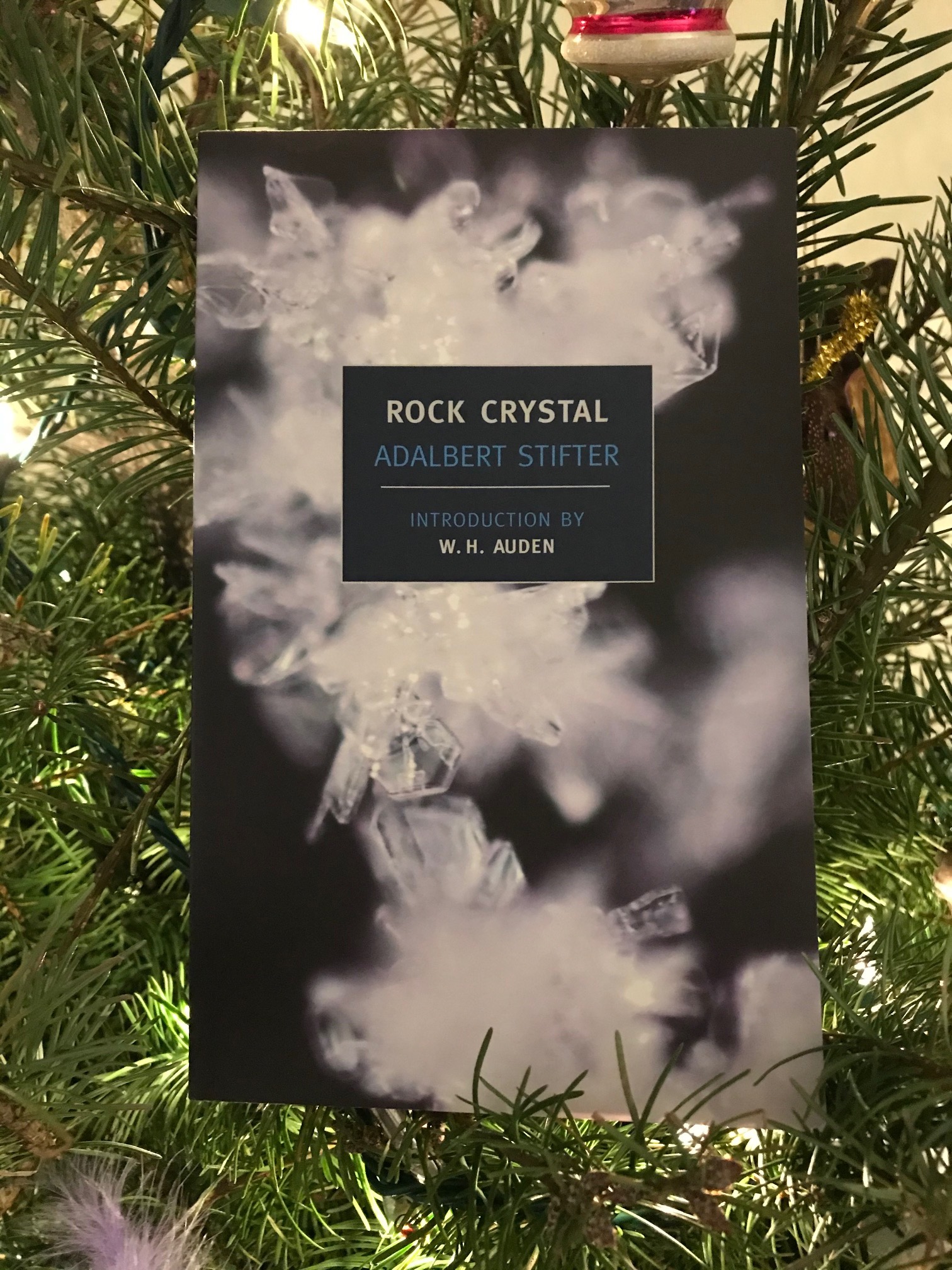
It’s the first day of 2021, and I spent part of it reading Rock Crystal by Adalbert Stifter in the NYRB Classics series (translated by Elizabeth Mayer and Marianne Moore and introduced by W. H. Auden). Two small heroes, the son and daughter of a shoemaker, set out across a col (“a mountain-range of moderate height, connecting two larger, more considerable, ranges”) from their grandparents’ village of Millsdorf back to their home village of Gschaid. It’s Christmas Eve, and they are met by a relentless snowfall and become lost on a silent, windless night in the Alps.
Stifter’s novella is at once pastoral and vast, sweet and threatening. I can’t speak to the German original, but the English reader can savor (and look up as needed) words ranging from church-spire and linden-tree to wan and chamois and moraine to vastness and firmament, and phrases such as little mountain-shoes and stockings (which I like to imagine is one word in German) and ones with adjective strings—the white fluctuating all-pervading pearly opaqueness.
One small scene stood out to me: the bells during the Christmas Day Mass signaling the Elevation of the Host sound out over the mountain, and the people who hear them momentarily kneel and pray—as if bending before the Christ-child on the icy slopes, only slightly removed in time from the shepherds who are instructed by the angel to go to Bethlehem. Kneeling at the sound of the bell is likely a mundane fact for this time and place in Europe, but this scene combines with other, far-grander scenes in Rock Crystal that portray the miracles of childhood, nature, human bonds, and indeed Christmas.


 Davis Editing
Leave a reply to Ryan Davis Cancel reply